Stories & Ideas
Turn Text Messages Into a Song
Start by choosing the part of the conversation that has a story, emotion or funny idea.
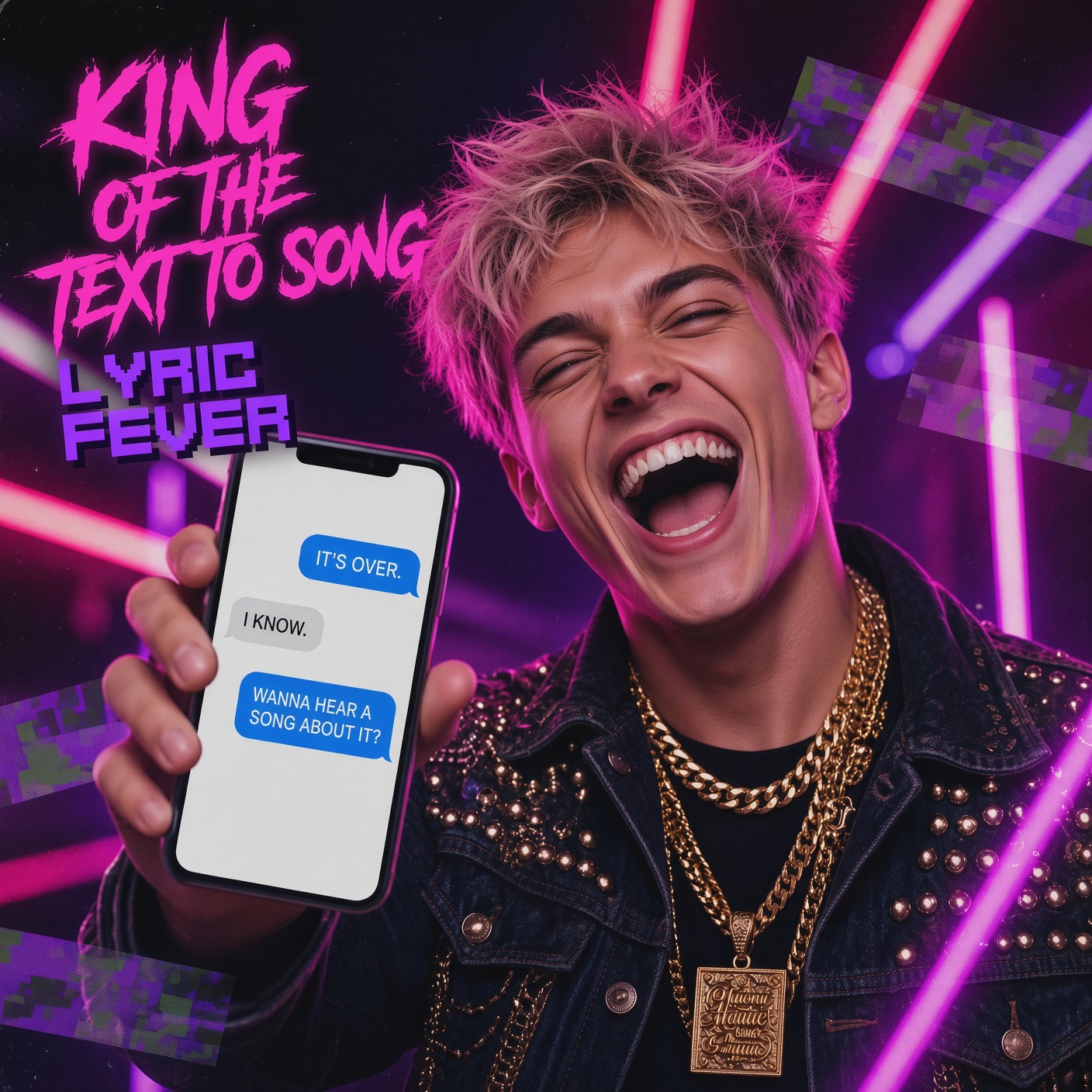
REAL TEXT-TO-SONG EXAMPLE
Venmo Me Now by Brody Johnson
A verified Audilo example of a personal moment becoming a complete, playable song.
Some of the best song ideas may already be sitting in your phone.
Not because every text conversation is poetic.
Usually it's the opposite.
Texts are messy.
They're full of half-finished thoughts, jokes that make sense to three people, arguments that went on too long, accidental honesty, ridiculous screenshots and ordinary sentences that somehow become unforgettable.
That's exactly why they can make interesting songs.
A text-message song doesn't need to sing every message word for word.
The better question is:
What's the story hiding inside the conversation?
Quick Answer: How Do You Turn Text Messages Into a Song?
Start by choosing the part of the conversation that has a story, emotion or funny idea.
Then:
- Remove private information.
- Identify what actually happened.
- Find the funniest, strongest or most emotional detail.
- Decide whose point of view tells the story.
- Choose a genre that fits—or deliberately doesn't.
- Turn the conversation into a concise song prompt.
- Generate the song.
- Listen and refine the idea.
You usually don't need every text.
You need the part that makes someone say:
"There is definitely a song in this."
What Kind of Text Messages Make Good Songs?
Almost anything can work if there's a story.
The Ridiculous Group Chat
Someone said something so absurd that the conversation is still being quoted six months later.
That's a song.
The Tiny Argument That Became Huge
Maybe it started over dishes.
Or directions.
Or who forgot to buy milk.
The smaller the original problem, the funnier the song can become.
The First Conversation
Old messages between two people who eventually became a couple can contain details neither person remembers anymore.
The Breakup Conversation
This can become deeply personal, so use judgment.
You don't need to publish somebody else's private words to turn the emotional idea into a song.
The Family Text Thread
Family conversations contain personalities.
One person answers immediately.
One appears three days later.
Someone sends five photos.
Someone responds with a thumbs-up to everything.
That's character.
And character is useful in songwriting.
The One-Line Message
Sometimes the whole idea comes from one sentence.
"Don't forget you promised you'd never buy another motorcycle."
There's already a story hiding behind that.
Protect People's Privacy Before You Create
This matters.
Before using a private conversation as creative source material, remove information that doesn't belong in a song or shouldn't be shared.
That may include:
- phone numbers
- addresses
- email addresses
- passwords or codes
- financial information
- medical information
- private photos
- children's identifying information
- workplace information
- other people's personal details
You also don't need to preserve someone's exact wording.
Often the better creative approach is to extract the story rather than reproduce the conversation.
Example: From Text Conversation to Song Idea
Imagine a group chat like this:
Sam: Who got the tacos?
Alex: I did.
Sam: How much do I owe you?
Alex: Don't worry about it.
Two hours later
Alex: Venmo request: $4.37
Sam: You cannot be serious.
Alex: There was tax.
The obvious topic is tacos.
But the actual song is about the friend who will absolutely Venmo you for $4.37.
That's the character.
Step 1: Find the Hook
Possible hook:
"You Venmo me now, but you said don't worry about it."
Or perhaps:
"$4.37 between friends."
The exact lyric isn't important yet.
We're identifying the comic center of the story.
Step 2: Pick a Genre
This could become:
- funny country
- pop
- rock
- hip-hop
- acoustic comedy
- something intentionally dramatic
Genre can change the joke.
A huge emotional country ballad about $4.37 is funny partly because the music takes the problem far more seriously than it deserves.
That contrast can be useful.
Step 3: Turn It Into a Prompt
Starting Prompt
Example Prompt
Make a funny song about a Venmo request.
More Directed Prompt
Example Prompt
Create a playful modern-country song about a friend who says "don't worry about it" after buying tacos and then sends a Venmo request for $4.37 two hours later. Treat the tiny amount like a dramatic betrayal between lifelong friends. Use acoustic guitar, steady drums and an overly sincere male vocal. Keep the verses conversational and let the chorus revolve around "$4.37 between friends."
What Changed?
The expanded prompt adds:
- character
- exact situation
- comic contrast
- genre
- instrumentation
- vocal direction
- possible hook
The humor doesn't come from asking AI to "be funny."
It comes from giving a ridiculous situation a very serious musical treatment.
Another Example: A Text That Isn't Funny
Imagine this message:
Found your old sweatshirt in the back of my car. I don't know why, but I couldn't throw it away.
That's already close to a lyric.
But don't just ask AI to sing the text.
Ask what it means.
Maybe the actual story is:
Someone thought they were over a relationship until an ordinary object proved otherwise.
Starting Prompt
Example Prompt
Sad song about finding an ex's sweatshirt.
More Directed Prompt
Example Prompt
Create an intimate indie-rock song about finding an ex's old sweatshirt in the back of the car months after the breakup. The narrator thought they had moved on until this ordinary object brought everything back. Begin with clean guitar and restrained drums, keep the verses conversational, and let the chorus focus on being surprised by what we choose not to throw away.
What Changed?
One text became:
- a scene
- a character
- an emotional contradiction
- a musical direction
- a possible chorus idea
That's story-to-song thinking.
You Don't Need to Use the Texts Word for Word
This is important.
A conversation is source material.
It doesn't have to become a transcript with chords.
Suppose someone texts:
Flight delayed again. Landing at 1:20. Don't wait up.
The song might not be about a delayed flight at all.
Maybe it's about two people whose relationship has slowly become logistical.
That ordinary text could become the moment the narrator realizes something larger has changed.
Look underneath the words.
Sometimes the Genre Should Match the Conversation
A tender conversation may naturally suggest:
- acoustic
- indie
- R&B
- piano ballad
A ridiculous conversation might suggest:
- comedy country
- upbeat rock
- hip-hop
- pop
But sometimes the opposite is more interesting.
A minor disagreement treated like an enormous cinematic tragedy can be funny.
A painful conversation set against bright energetic music can create emotional contrast.
There's no rule that says the music has to feel exactly like the texts.
How Much of a Conversation Should You Use?
Usually less than you think.
Look for:
- one memorable line
- one turning point
- one repeated phrase
- one character trait
- one misunderstanding
- one emotional realization
Then build outward.
Songs need focus.
A 200-message group chat probably contains five different songs.
Don't force all of them into one.
Text Message to Song Prompt Template
Example Prompt
Example Prompt Template
Create a [genre] song based on a conversation where [what happened]. The real story is about [underlying meaning]. Tell it from [point of view]. Use [instruments] and a [vocal direction] vocal. Keep the verses focused on [specific details] and build the chorus around [main hook/idea]. The overall mood should feel [mood].
Short Version
[Genre] + [conversation] + [what it's really about] + [hook] + [sound]
Five Text-Message Song Ideas to Try
1. The Autocorrect Disaster
A completely innocent message becomes something wildly different because of autocorrect.
Don't just repeat the typo.
Write the song about trying to explain it afterward.
2. "On My Way"
A song about the friend who has been "on my way" for 45 minutes and clearly hasn't left the house.
3. The Family Group Chat
One person sends paragraphs.
One person sends thumbs-up reactions.
One person has notifications muted.
One person somehow turns every conversation into a weather report.
4. The Message You Never Sent
A drafted message that sat unsent can be more interesting than a conversation.
What's the person afraid to say?
5. The Last Ordinary Text
Sometimes a completely ordinary message becomes meaningful only later.
That can become a much more serious song about memory, change or loss.
Treat sensitive stories carefully and avoid exposing another person's private information.
Can You Turn a Screenshot of Text Messages Into a Song?
Audilo's Studio conversation workflow accepts screenshots or pasted text. Upload the screenshots, review and edit the extracted conversation, remove names or private details, then choose the direction for your song.
What If the Conversation Is Too Long?
Summarize it.
Try answering:
Who is involved?
What happened?
What changed?
What's the funniest or most emotional moment?
What line would make the best hook?
Then write a short description.
For example:
Two longtime friends argue in a group chat because one always says they're five minutes away when they haven't even left home. Make it a playful pop-rock song from the point of view of the friend who's always waiting.
That's often more useful than pasting 80 messages.
From Conversation to Story to Song
This is the larger idea.
Text messages are interesting because they're little pieces of real life.
But the song doesn't live in the phone.
It lives in what the messages reveal.
Maybe it's friendship.
Embarrassment.
Love.
Distance.
Growing up.
A ridiculous personality trait.
Something somebody couldn't say out loud.
That's what you're trying to find.
The messages are simply where you discovered it.
Frequently Asked Questions
Can I turn text messages into a song with AI?
Yes. A conversation can be turned into a song idea by identifying its story, characters, emotional center or funniest detail and using that information as creative direction for an AI song generator.
Do I have to use the messages exactly as written?
No. In many cases it's better to use the conversation as source material and rewrite the idea into lyrics or a song story.
Should I paste an entire text conversation into an AI music generator?
Usually not. Remove private information and identify the part of the conversation that actually matters. A concise summary can often provide better creative direction than a long transcript.
Can a funny text conversation become a song?
Absolutely. Inside jokes, misunderstandings, group chats and minor arguments can all become song ideas. A useful technique is to identify the one detail that makes the situation funny and build the song around it.
Can serious or emotional texts become songs?
Yes, but treat private conversations carefully. You can preserve the emotional idea without reproducing another person's exact private messages.
What genre works best for a text-message song?
There isn't one best genre. The story might naturally suggest a style, or you can deliberately choose a contrasting genre for humor or emotional effect.
Can Audilo turn an idea from a conversation into a song?
Yes. Audilo's song-creation workflow can take a written idea or prompt and use it as creative direction for generating a song. Describe the conversation and what you want the song to become rather than assuming every message needs to appear literally.
Your Phone Is Full of Stories
Most text messages aren't written to become lyrics.
That's what makes them interesting.
They're ordinary.
Unpolished.
Sometimes ridiculous.
Sometimes more honest than we intended.
The next time a conversation makes you laugh, makes you angry or sticks in your head longer than it should, don't just screenshot it.
Ask:
What's the song in this?
Then see where it goes.
About Audilo
Audilo is an independent AI music creation platform built in San Diego, California. It supports song creation, songwriting, instrumentals, music enhancement and cover-art workflows in a web browser.
Learn more about Audilo →